Key points
- Regents delayed the vote on AI Engaged until February to gather more input.
- Hundreds of faculty oppose the draft because Anthropic’s Claude helped write it.
- The document mandates campus-specific policies and a system-wide plan within one year.
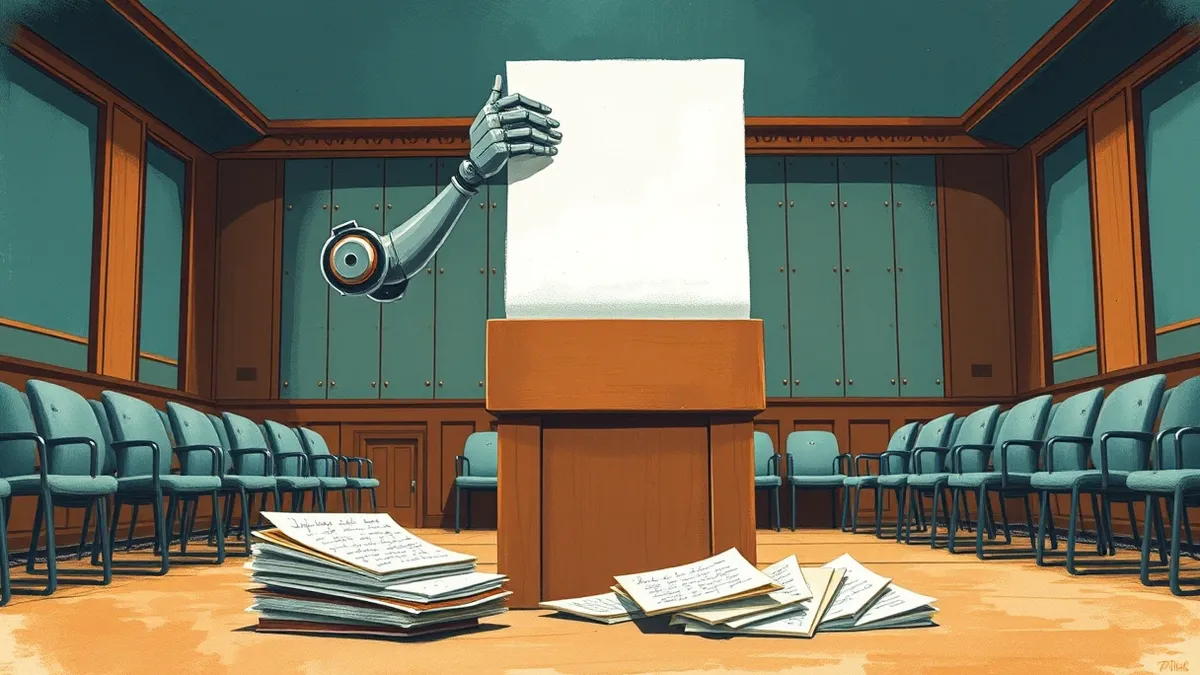
University of Alaska system officials proposed a four-page framework for artificial intelligence use, but the initiative stalled after significant pushback from faculty members who objected to the document’s creation method.
The claim
Ben Shier, the system’s chief information technology officer, stated that he generated the initial draft of AI Engaged by feeding human suggestions, meeting notes and board content into Anthropic’s Claude chatbot. The resulting document does not set binding long-term policy but requires coordinated reporting to regents and individual campus policies within one year of adoption.
The response
Hundreds of faculty members opposed the document specifically because it was partially written by an AI chatbot. A petition signed by nearly 200 students and staff, mostly in Anchorage, urged regents to adopt a brief statement written entirely by humans instead, citing concerns over academic integrity and authorship.
What changes, what does not
The Board of Regents postponed voting on AI Engaged until their February meeting. They also directed the AI Coordinating Council to begin crafting campus-specific AI policies in the interim. President Matthew Cooper noted that achieving universal agreement on AI use is unlikely, but emphasized the need for urgent progress despite disparate opinions among faculty groups.
Building on this
Developers and policy architects can observe how institutions attempt to operationalize AI governance through hybrid human-AI drafting processes. The documented limits include the requirement for campus-specific policies and a one-year timeline for a system-wide framework. Interfaces for stakeholder input remain open via the postponed vote, suggesting that policy documents generated with LLM assistance may face scrutiny regarding provenance and human oversight in public sector applications.
Why it matters
- It highlights a concrete case where faculty rejected an AI-assisted policy draft due to authorship concerns.
- It shows that regents are mandating campus-specific AI policies while delaying system-wide adoption.
- It indicates that student misuse of generative AI has increased since 2022, driving policy urgency.
- It demonstrates that IT leaders are using LLMs to synthesize meeting notes into governance documents.
Topics: governance, Anthropic, Claude, higher education, policy
Updated
Then / now / next
Faculty discussions about AI governance had been ongoing since chatbots were introduced.
Regents postponed voting on the AI Engaged framework due to faculty opposition.
The AI Coordinating Council is crafting campus-specific policies in the interim.
Story timeline
- Then Faculty discussions about AI governance had been ongoing since chatbots were introduced.
- Now Regents postponed voting on the AI Engaged framework due to faculty opposition.
- Next The AI Coordinating Council is crafting campus-specific policies in the interim.
The strongest doubt
Counterpoint from the sources
President Matthew Cooper stated that while concerns exist, there is strong support for moving forward with urgency on AI governance.
Did this article give you the evidence you needed?
Your choice stays on this device. No public tally.Questions readers ask
Why did faculty oppose the AI Engaged document?
Faculty opposed it because it was partially written by Anthropic’s Claude AI chatbot.
When will the regents vote on the policy?
The regents postponed the vote until their February meeting.
Does the document bind institutions long-term?
No, the document does not bind institutions long-term but requires policy development within one year.
Connected stories
Reading receipt
- Regents delayed the vote on AI Engaged until February to gather more input.
- Hundreds of faculty oppose the draft because Anthropic’s Claude helped write it.
- The document mandates campus-specific policies and a system-wide plan within one year.
Still open: Will the February vote result in adoption of the AI-assisted draft or a human-written alternative?
Still open: How will campus-specific policies differ from the system-wide framework?